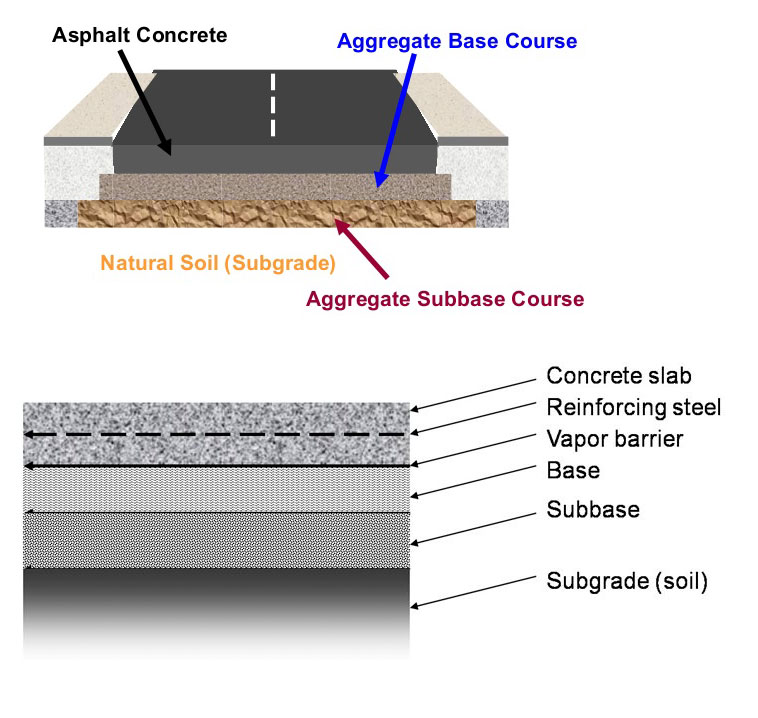
Subgrade is taken as the most vital element of the pavement structure as it functions as a foundation for other pavement elements which are developed upon it and resist detrimental influences of weather and various traffic loads.
The performance of subgrades is significantly impacted with unstable water content. Hence, it is essential to examine the behaviour of subgrade under several conditions. Under this condition, wet, moist, and damp subgrade are identified on the basis of the water quantity in the subgrade components.
The concerned engineers should have clear conceptions on the variations among wet, moist, and damp condition and how the strength of pavement structure is influenced by them. The bearing strength, shrinkage, and swelling of subgrade are mostly affected by the moisture content. Given below, the detail information about the variations among wet, moist, and damp subgrade.
Wet Subgrade
- As per ACI 116R-90, wet condition happens when the material comprises of apparent free moisture.
- It is the indication of maximum level of moisture.
- Wet subgrade is majorly damaged under loads.
- Wet subgrade tolerates severe swelling and shrinkage and due to this pavement deforms and cracks.
- Wet subgrade is not recommended for pavement construction. Therefore, so it should be upgraded with proper method.
- When the roads are built up on such subgrade devoid of correct advancement, then future maintenance work is necessary.
Moist subgrade
- As per ACI 116R-90, if the material is mildly coated with moisture, the moist condition occurs.
- There is mild moisture among wet and dump.
- Bearing strength performance is superior as compared to wet subgrade but lower than damp subgrade.
- Swelling and shrinkage of moist subgrade and flaws of pavement above occurs to some extent among damp and wet subgrade.
- It is suitable for pavement construction but a slight advancement is required.
- Less costly improvement is applied to get rid of future maintenance.
Damp subgrade
- As per ACI 116R-90, damp condition happens if the material is marginally dump but not gets dry to the touch Specifies lowest level of moisture.
- Damp subgrade functions well with regard to load bearing strength as compared to wet and moist subgrade.
- It is not affected with swelling and shrinkage significantly, and therefore the damage is not adequate to the pavement.
- It is ideal for pavement construction.
- It does not need any improvement and future maintenance is inexpensive.
~~~~~~~~~~~~~~~~~~~~~~~~
Published By
Rajib Dey
www.constructioncost.co
~~~~~~~~~~~~~~~~~~~~~~~~
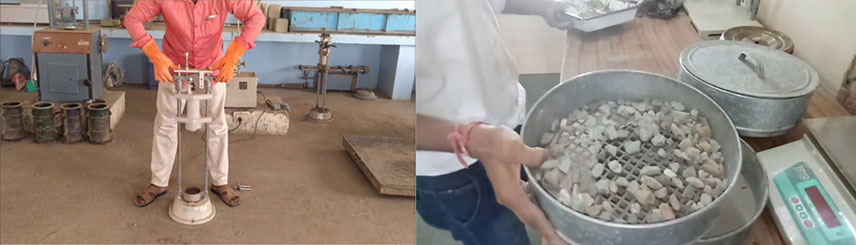
Impact value of coarse aggregate plays an important role to find out the moisture content of coarse aggregate.
For this purpose, the following equipments are required :-
1) Impact testing machine (metal base)
2) A cylindrical steel cup of internal dimension: 102mm & depth 50mm.
3) IS sieves of sizes 12.5, 10 & 2.36mm.
4) A straight metal tamping rod having circular cross section 16mm in dia. And 600mm long rounded at one end.
5) Weight balance of 01 gm.
6) A relevant oven thermostatically controlled to retain a temperature of 100°C to 110°C Samples:
1. i) Coarse Aggregate
The following methods should be applied :-
1. The impact machine stands devoid of wedging or packing upon the level plate.
2. The cup should be attached rigidly in exact location on the base of the machine and entire test sample should arranged in it depending on fifteen blows of the metal hammer of weight 14 kg downfallen from a height of 38 cm.
3. The quantity of fine material that goes through 2.36mm resultantly from pounding will point out the strength of the sample of aggregate. The proportion of the weight of the fines (finer than 2.36mm size) developed to be taken as weight of the total sample selected is stated as a percentage. It is called as aggregate impact value as per IS 283-1970
Result:
Aggregate impact value does not surpass 45 percent by weight for aggregate utilized for concrete apart from wearing surface and 30 percent by weight for concrete for wearing surface like run way, roads and pavements.
To get more detail, go through the following link wrengineers.in
~~~~~~~~~~~~~~~~~~~~~~~~
Published By
Rajib Dey
www.constructioncost.co
~~~~~~~~~~~~~~~~~~~~~~~~
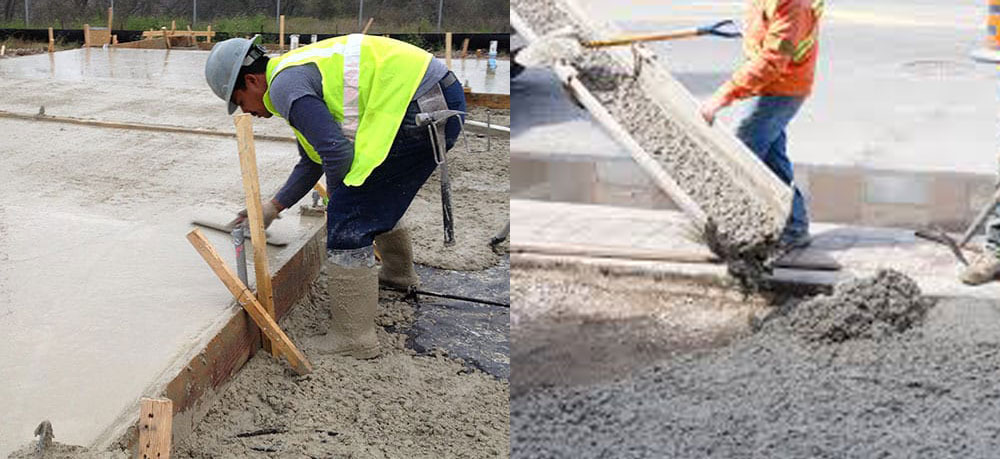
The longevity of modern concrete is maintained for a prolonged period when the concrete is proportioned and arranged at the construction site in a perfect manner.
Besides, ageing of construction, there are other factors to influence the stability and reliability of the concrete construction which range from the impact of dreadful weather, cavitations, abrasion-erosion, corrosion of reinforcement, impacts of chemicals, carbonation, cracks, design and construction defects, etc. Under such circumstances, it is essential to repair concrete quickly as possible.
Given below, some useful tips for undertaking proper repairing work for concrete :-
1. Find out the reason for damage in concrete
It is the most vital step for concrete repairing. It is necessary to recognize the proper reasons of damage, and alleviate that reasons so that repair is maintained for long period otherwise the repair may weaken again under the similar reason, and leads to waste of effort and money.
It is required to recognize the action of freeze and thaw, cavitations, abrasion-erosion, structural overload or movement in the form of cracks or spalling of concrete.
In specific cases, it becomes difficult to determine the exact rasosn of the damage to concrete and for this purpose some tests like carbonation of concrete, the chemical attack on concrete, alkali-aggregates reaction in concrete etc are required. It is recommended to consult with experienced & authorized structural engineer or repair experts to conduct testing of concrete.
2. Estimate the Range of Damage in Concrete
Work out the range and intensity of damage i.e. how much concrete gets damaged as well as how this damage will impact the longevity of concrete in the future. Alternatively, also determine how much strength or load bearing capability are lost for concrete.
Concrete soundness test is considered as the most recognized and simple method to estimate the damage of concrete. Under this test, a hammer or large metal is used to the surface of the concrete. If the sound of the strike produces clear ringing sound, then the concrete is long-lasting, and if the sound remains hollow or dull, the concrete is considered as delaminated or unsecured concrete (weak concrete) and the repairing should be done instantly.
There various non-destructive tests to estimate the damage in concrete. Given below, the detailed lists of some crucial non-destructive tests to estimate the stability or damage of concrete.
• Rebound Hammer Test
• Ultrasonic Pulse Velocity Test
• Core Test
• Carbonation Test
• Chloride Content Test
It is recommended to undertake some maintenance works to recognize the damage of concrete at an initial phase. The proper and regular maintenance of the house minimizes the cost of repair, and ultimately saves money significantly.
Preparation Prior To Repairing of Concrete
Elimination of decayed or damaged concrete is crucial for undertaking a perfect repair. This step comprises of the cutting/chiselling of concrete in appropriate shape, elimination of loose concrete, steel cleaning and the coating of bonding agent on reinforcement steel, cleansing of the repair area, use of the bonding agent on the concrete surface (to create a exact bond among existing and new concrete), use of repair method, and curing of repaired surface.
4. Selection of Repair Materials and Methods of Repair
Repair materials and the repairing process should be chosen on the basis of the damage of concrete, size of repair work, the completion time of repair work, etc. Repair materials and repairing process should be arranged in much a manner that it will not speed up the damage of existing concrete or reinforcement steel.
5. Curing of Repair
The condition of the curing varies for different repairs materials. The manufacturers of repair materials always indicate the curing need of those specific materials in their material catalogue. Some materials need comprehensive water curing, whereas less curing is required for others. Some require protection devoid of water exposure unless they become hardened.
It should be remembered that, insufficient or inappropriate curing will weaken the performance of repair materials as well as the stability of repaired concrete/structure. Finally, the cost of rework of repairing will be raised significantly. Therefore, curing should be perfect once the repairing of concrete is completed.
To get the complete solution of the above problem, go through the following article gharpedia.com
~~~~~~~~~~~~~~~~~~~~~~~~
Published By
Rajib Dey
www.constructioncost.co
~~~~~~~~~~~~~~~~~~~~~~~~
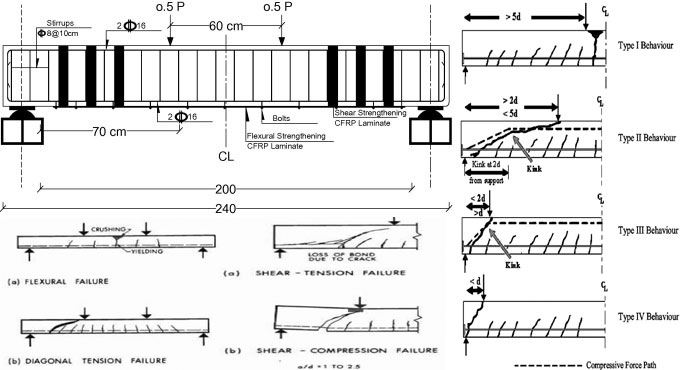
To operate as reinforced concrete member, the strain of steel should be equivalent as that of concrete; with the existence of any slip, the composite action of concrete and steel will become invalid. Reinforcing bars in concrete beams undergo two types of failure under bond stress like Direct pullout and Splitting.
Direct pullout failure:
This type of failure happens to those beams where there is adequate confinement in adjacent concrete for reinforcing bars. Direct pullout failure occurs under the following conditions :-
• Considerably small diameter of bars
• Adequate confinement with large concrete cover
Confined bars in adjacent concrete, when exposed to tensile force, adhesive bond other than friction among two materials turns out to be mobilized. When both obstructions are suppressed, adjacent concrete is crushed ultimately prior to deformations on the bar surface and this local crushing leads to detachment of bars.
Adjacent concrete, except for that has been crushed prior to ribs just nearby interface of bars, persists intact. For deformed bars, mechanical interlock with adjoining concrete arranged by deformations is more crucial as compared to adhesive force and friction.
Splitting failure: Under this type of failure, concrete is broken along specific length of bars. When a beam or any flexure member deflects, a wedging action is formed owning to deformation of bars that results in generating lateral tension on concrete. This failure becomes evident when bar spacing, concrete cover or confinement is inadequate.
Splitting type failure of concrete beam is mostly found in general as compared to bond failure because of splitting. As a result of wedging action, ribs on bars tolerate against surrounding concrete.
Splitting happens in two directions. It may form in vertical plane or developed horizontally along the plane of reinforcing bars. Horizontal splitting is found extensively at a diagonal crack. Dowel action often enhances the possibility of splitting.
Hence, shear failure (diagonal cracking) and bond failures are interconnected but this relation is very complicated to explain.
To get more detail, go through the following link civil-engg-world.blogspot.com
~~~~~~~~~~~~~~~~~~~~~~~~
Published By
Rajib Dey
www.constructioncost.co
~~~~~~~~~~~~~~~~~~~~~~~~
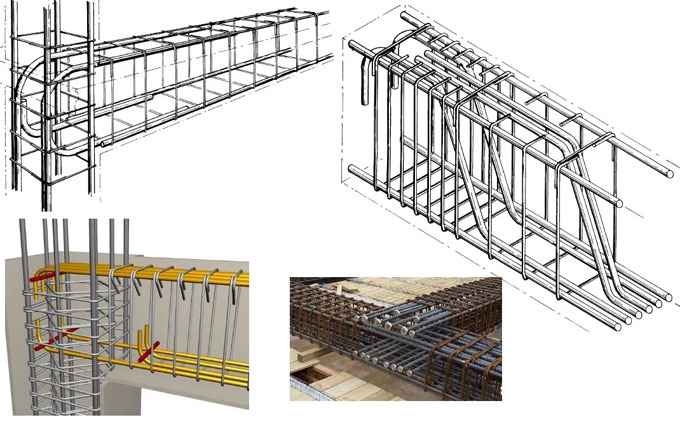
While designing the reinforced concrete members, it is necessary to check the steel reinforcement in jobsite prior to arrange concrete. Besides, ensure the concrete foundations, beams, columns, etc. are constructed as per design norms. Often, it is observed that steel beam stirrups employed in reinforced concrete design, are not installed properly.
The beam stirrups are extensively utilized in residential construction. In order to produce perfect architectural design and satisfy building occupant requirements, the sizes of concrete beam are made thinner and their lengths are increased.
In our experience, this has been the result of architectural design and. The higher cost of foundation components like drilled piers is also a major concern. To lessen the requirement of extra piers, the lengths of concrete beam are raised and it leads to the application of steel stirrups.
Concrete beams differ in depth. The shear strength of the beam will be increased by making beam deeper. For insufficient depth, steel stirrups should be included to raise the shear strength of the beam. These stirrups generally belong to one piece of steel that is twisted into a rectangular shape. Often small diameter steel like #3 and #4 rebar is applied. The stirrup normally wraps around the bottom and top bars of the beams.
It is essential to indicate the size, distance and position along the length of the beam where the stirrups will be assigned. Besides, the dimensions of stirrup should also be indicated in the sections in order that the stirrup is manufactured before installation.
Stirrups are suitable for the areas of high shear, like bearing points and under large point loads.
The installer should take proper care for fabrication of the stirrup from one piece of steel and sufficiently overlap each end (speak to the Structural Engineer or refer to the ACI code for variations). Sometimes, the stirrup is not pre-fabricated and the installer attempts to produce the stirrup in the field, once the horizontal bars are already in position. It is normal since the stirrup is built up from two pieces with insufficient lap splice.
The method is simple to set up a stirrup simultaneously the horizontal reinforcement is being installed. To avoid last-minute modifications, it is recommended to consult with the Structural Engineer with any confusion regarding size, shape, spacing and installation of stirrups before inspection.
 Read more
~~~~~~~~~~~~~~~~~~~~~~~~
Published By
Rajib Dey
www.constructioncost.co
~~~~~~~~~~~~~~~~~~~~~~~~
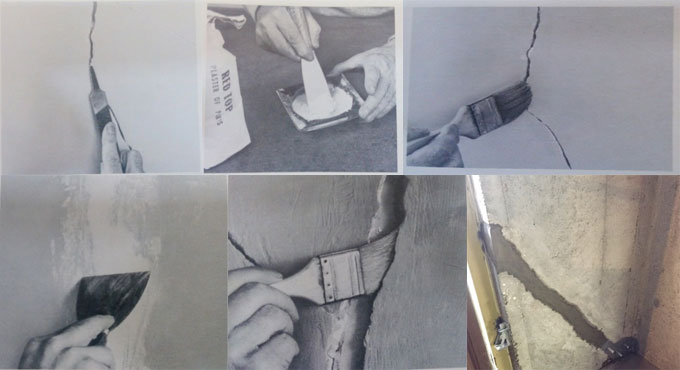
Cracks in plaster walls are normally occurred due to various factors like settlement, vibration or atmospheric conditions and in some cases for defective construction.
To repair cracks, the following items will be required :-
a. Blade for widening of cracks
b. Patching material usually putty
c. Painting brush
d. Paint scrapper
e. Flexible putty knife for filling
f. Fine grade sandpaper
THE CRACKS CAN BE REPAIRED IN THE FOLLOWIN WAYS
1. With the help of blade or putty knife, broaden and undercut opening to arrange grip for filler. If filler material is applied in very small quantity then there will be no tough bonding and too much quantity is not also recommended. In second option, opt for plastering initially.
2. Arrange the patching material to fill the crack; blend it with a solid, buttery consistency for quick application. Ready-made putty is accessible almost everywhere and it should be blended with water.
3. Apply a brush to moisten the surface or spray to the full depth of the unsealed crack. Ensure water arrives at the far end of crack. The surface should be moistened perfectly to make the bond better.
4. The patching material alias putty should be applied through a flexible putty knife to fill the opening totally. Finally, take away surplus putty and level it on the wall by a paint scrapper.
5. A fine grade sand paper should be applied to smooth the patch surface. The adjacent surface should also be leveled. If gap still exists among crack layer and adjacent, then apply second filling coat to keep it dry. As soon as, it becomes dry, again use sand paper. Dust the surface and check for any divergences.
6. As soon as repaired patch gets dried, use prime coat over the filled-in crack and surface adjacent area. It will conceal the repaired area and provides a fine smooth finishing.
7. To patch a big crack, then undercut it, take away all the loose plaster and moisten the surface like equivalent to small crack.
8. Blend a batch of plaster and fill the cavity. Keep it dry for 24hours. Shrinkage may take place throughout drying.
9. If shrinkage happens, moisten again the patch area and fill cavity with fresh filler. Let it gets dry. Sand smooth and finally use prime coat.
 Read more
~~~~~~~~~~~~~~~~~~~~~~~~
Published By
Rajib Dey
www.constructioncost.co
~~~~~~~~~~~~~~~~~~~~~~~~
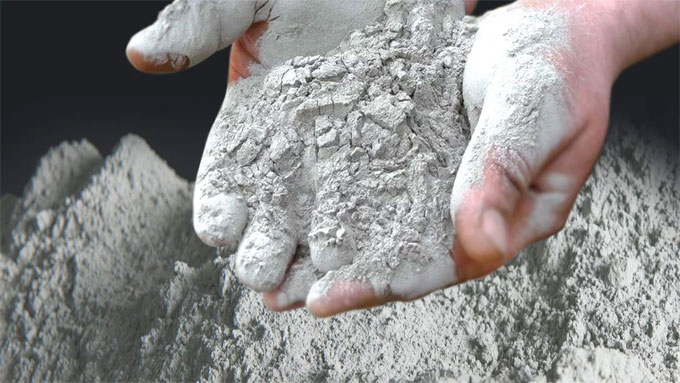
Cement is considered as strong binding material for building construction. So, there should be proper knowledge on the composition of cement. The functionality of cement constituents plays a major role for cement composition. To attain the superior quality of cement, the amount of constituents should be modified at the time of producing cement.
Formation of Cement - The following constituents are part and parcel of cement. Given below, the common percentage of these constituents in cement:
Constituents : Percentage in cement
Lime 60-65
Silica 17-25
Alumina 3-8
Magnesia 1-3
Iron oxide 0.5-6
Calcium Sulfate 0.1-0.5
Sulfur Trioxide 1-3
Alkaline 0-1
Functions of Cement Constituents - Given below, the detail characteristics of these constituents :
Lime: Lime stands for calcium oxide or calcium hydroxide.
The existence of lime should be adequate to develop silicates and aluminates of calcium.
Inadequacy in lime minimizes the strength of property to the cement.
Inadequacy in lime leads to quick setting of cement.
Surplus in lime quantity makes cement weak.
With the existence of lime excessively, cement will be inflated and decomposed.
Silica: Silicon dioxide is called as silica, chemical formula SiO2.
There should be adequate quantity of silica in cement to dicalcium and tricalcium silicate.
Silica contributes strength to cement.
Normally, the percentage of silica is about 30 percent in cement.
1. Alumina: Alumina is Aluminium oxide. The chemical formula is Al2O3.
a. Alumina contributes rapid setting property to the cement.
b. Clinkering temperature is reduced with the existence of the necessary quantity of alumina.
c. Excess alumina makes the cement weak.
2. Magnesia: Magnesium Oxide. Chemical formula is MgO.
a. Existence of Magnesia should not be in excess of 2% in cement.
b. The strength of the cement will be decreased significantly with excessive magnesia.
3. Iron oxide: Chemical formula is Fe2O2.
a. Iron oxide assigns color to cement.
b. It functions as a flux.
c. At a very high temperature, it imparts into the chemical reaction with calcium and aluminum to develop tricalcium alumino-ferrite.
d. Tricalcium alumino-ferrite brings hardness and strength to cement.
4. Calcium Sulfate: Chemical formula is CaSO4
a. It exists in cement in the form of gypsum(CaSO4.2H2O)
b. It delays or retards the setting action of cement.
5. Sulfur Trioxide: Chemical formula is SO3
a. It should not exist in excess of 2%.
b. Excess Sulfur Trioxide makes cement to become weak.
6. Alkaline:
a. It should not exist in excess of 1%.
b. Excess Alkaline matter leads to efflorescence.
 Read more
~~~~~~~~~~~~~~~~~~~~~~~~
Published By
Rajib Dey
www.constructioncost.co
~~~~~~~~~~~~~~~~~~~~~~~~