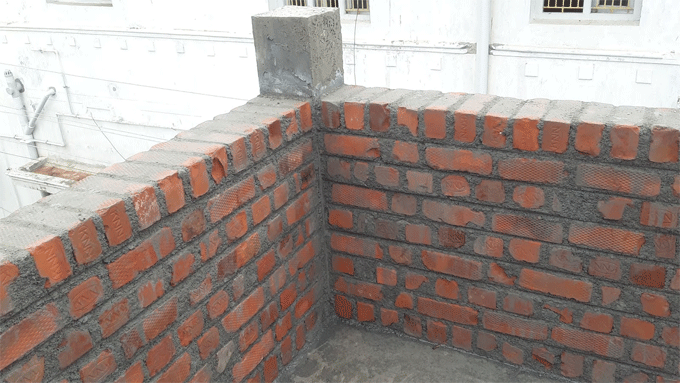
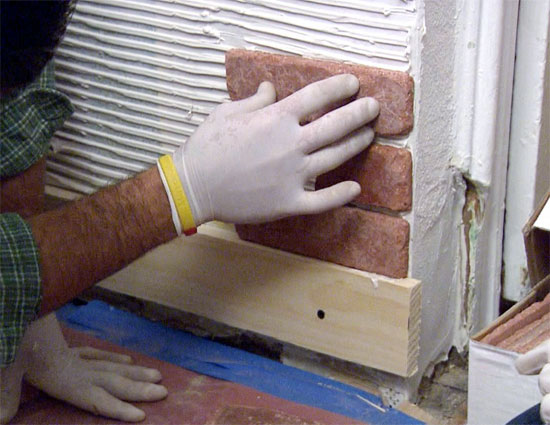
This article throws light on brick wall damage due to frost & water along with cracking, spalling & white or coloured mineral salt deposits that is called effloresence.
One can get details about the types of damages to structural brick walls as well as how to identify & assess movement and cracks in brick walls together with brick wall bowing or bulging and cracking failures.
Water & Frost Damaged, Broken Bulging Brick Walls: Frost damage to the brick wall happens because of roof spillage that passes through the building wall. Water penetrates the space behind the facing wythe of bricks on the wall and it leads to continuous frost-push and risk of falling of at least the exterior parts of the wall.
Cracked Bricks in Strutural Building Walls
If there are cracked bricks in the exterior walls, leaks occur at the abutment of balcony as well as to the building structure.
Efflorescence: white, yellow, brown deposits on brick walls, chimneys, foundations
Efflorescence is the white mineral deposits on a structural brick wall caused by water.
The task is very difficult to control roof runoff to retain water from flowing over building walls particularly on bigger, taller buildings where entry to sustain the gutter system is not possible.
Spalling Brick Building Walls: The brick spalling occurs owning to roof spillage and rain splash-up against the foundation wall. The frost spalling create damage to the brick wall, particularly around the building windows.
The brick surface gets damaged (surface spalling and loss of the hard glazed finish) because of weathering, water and salt exposure that results in producing more severe frost damage that involve cracking and frost "pop out" of sections of individual bricks or entire brick portions of the structure.
Water & Frost Damaged Brick Foundation Walls, Loose Bricks
There may be rigorous water and frost damage to the corner of a brick building, perhaps from roof spillage at the end of a gutter that was periodically chocked.
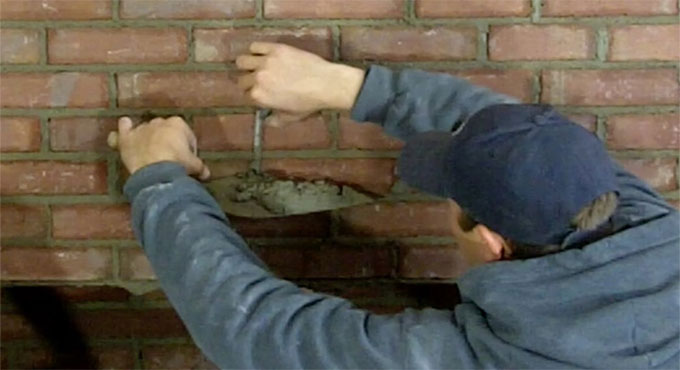
To settle these bricks against further movement and probably more serious foundation damage, a mason should be employed to repair the corner with a combination of reconstruction of the most-loose (or missing) bricks, and tuck pointing the leftover open mortar joints.
Read more
~~~~~~~~~~~~~~~~~~~~~~~~
Published By
Rajib Dey
www.constructioncost.co
~~~~~~~~~~~~~~~~~~~~~~~~
One can get details about the types of damages to structural brick walls as well as how to identify & assess movement and cracks in brick walls together with brick wall bowing or bulging and cracking failures.
Water & Frost Damaged, Broken Bulging Brick Walls: Frost damage to the brick wall happens because of roof spillage that passes through the building wall. Water penetrates the space behind the facing wythe of bricks on the wall and it leads to continuous frost-push and risk of falling of at least the exterior parts of the wall.
Cracked Bricks in Strutural Building Walls
If there are cracked bricks in the exterior walls, leaks occur at the abutment of balcony as well as to the building structure.
Efflorescence: white, yellow, brown deposits on brick walls, chimneys, foundations
Efflorescence is the white mineral deposits on a structural brick wall caused by water.
The task is very difficult to control roof runoff to retain water from flowing over building walls particularly on bigger, taller buildings where entry to sustain the gutter system is not possible.
Spalling Brick Building Walls: The brick spalling occurs owning to roof spillage and rain splash-up against the foundation wall. The frost spalling create damage to the brick wall, particularly around the building windows.
The brick surface gets damaged (surface spalling and loss of the hard glazed finish) because of weathering, water and salt exposure that results in producing more severe frost damage that involve cracking and frost "pop out" of sections of individual bricks or entire brick portions of the structure.
Water & Frost Damaged Brick Foundation Walls, Loose Bricks
There may be rigorous water and frost damage to the corner of a brick building, perhaps from roof spillage at the end of a gutter that was periodically chocked.
To settle these bricks against further movement and probably more serious foundation damage, a mason should be employed to repair the corner with a combination of reconstruction of the most-loose (or missing) bricks, and tuck pointing the leftover open mortar joints.
Read more
~~~~~~~~~~~~~~~~~~~~~~~~
Published By
Rajib Dey
www.constructioncost.co
~~~~~~~~~~~~~~~~~~~~~~~~